

Lubrication Systems for Wind Turbines
Wind energy has long since shed its status as a high-risk niche market for visionaries. Its current share of the European energy mix is 14 percent [1], placing it directly behind natural gas, coal, and hydropower. Around 600,000 people are employed worldwide in this sector [2], which is characterized by highly developed technologies and continuously improved processes, standards, and norms. Wind energy has thus become an indispensable part of today's modern industrial landscape.
Wind turbines have continuously evolved over the years and have grown considerably in size: in 1990, the rotor diameter was only 23 meters; by 2014, it had reached 99 meters. This growth in size, along with the associated regulations and new requirements, presents component manufacturers with particular challenges.
SKF's automatic lubrication systems have been around since the beginning of the wind industry: single-line and progressive lubrication systems have been used by leading manufacturers in this sector for over 20 years.
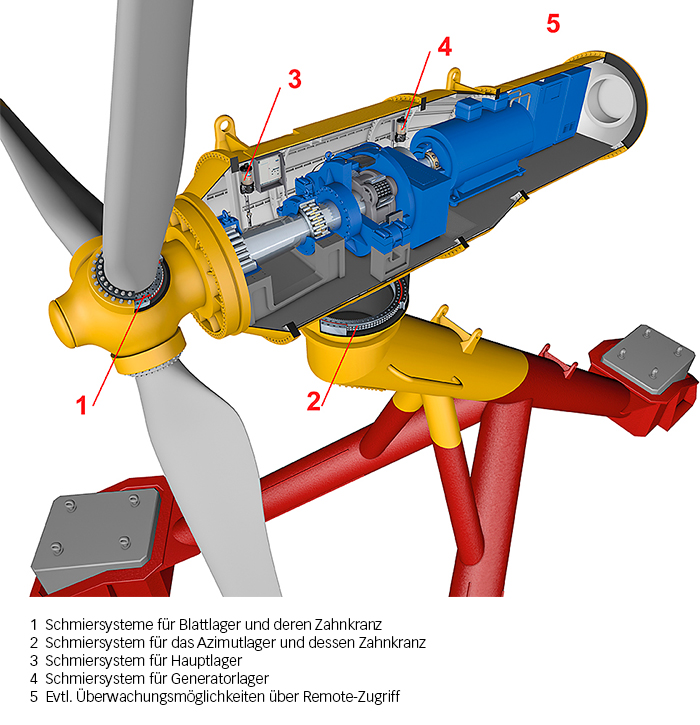
Against the backdrop of ever-larger wind turbines and technological advances, lubrication systems are now state-of-the-art components of open-gear azimuth bearings, rotor blade bearings and their open-gear rims, as well as main shaft and generator bearings.
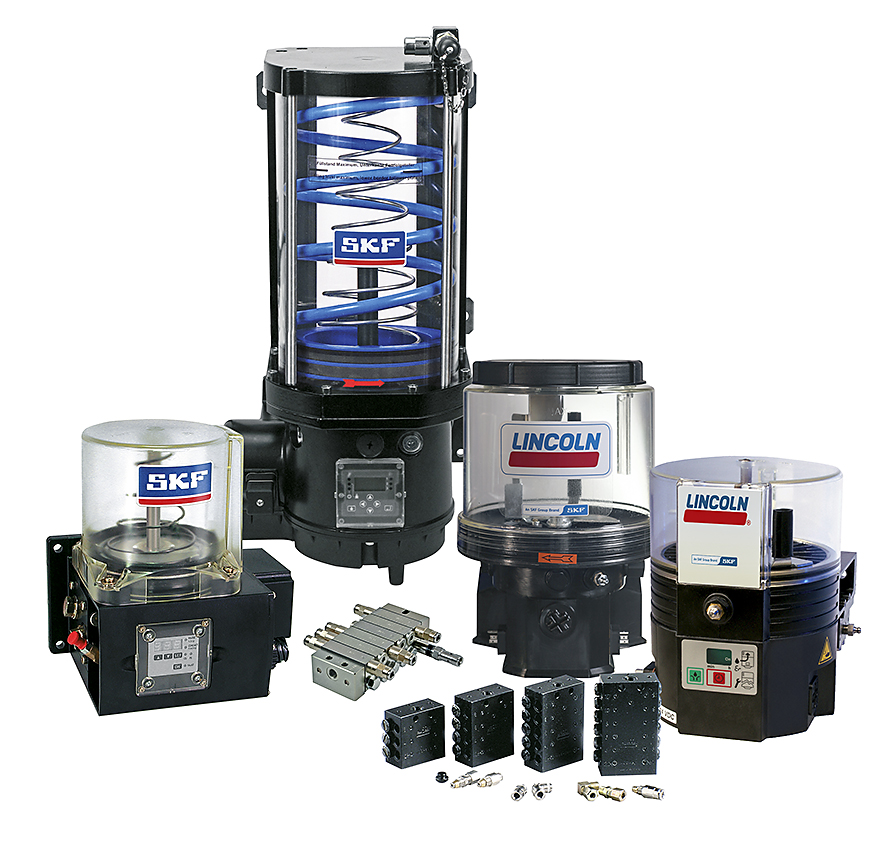
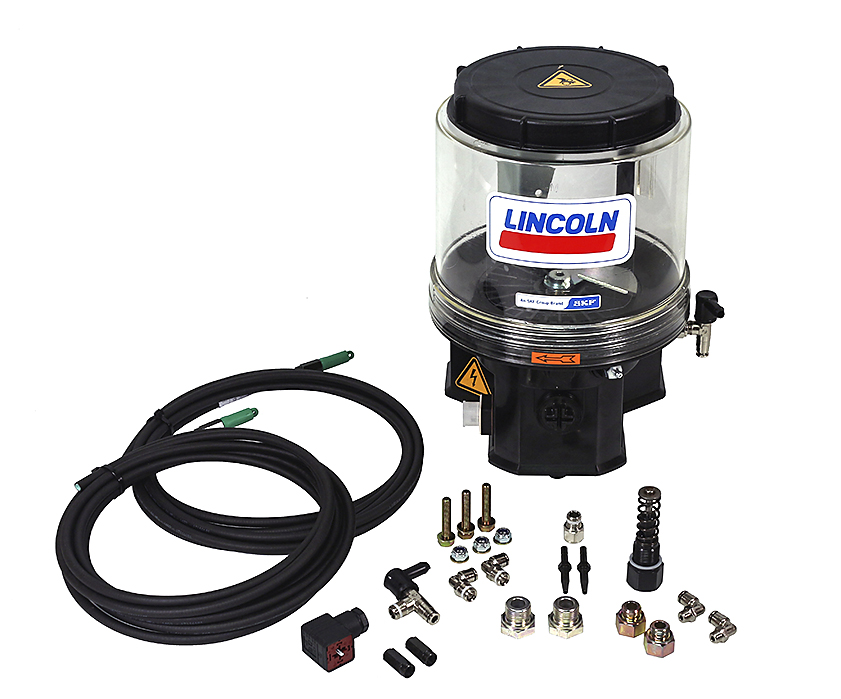
While a precisely metered amount of lubricant at the right time and place offers significant operational advantages, that's not all: Maintenance intervals can also be extended and plant availability increased. Furthermore, accident risks are reduced, over-lubrication is prevented, and unplanned downtime is minimized. Advantages like these have firmly established the SKF portfolio in lubrication system technology. It also represents an attractive upgrade option – not just for OEMs. Retrofitting with automatic lubrication systems has long been common practice in the aftermarket. SKF Lubrication Upgrade Kits (Figure 3) are available as easy-to-install plug-and-play solutions, expanding the range of customer-specific product offerings in the OEM sector. These kits include the pump and all necessary connecting elements and accessories. Moreover, the wide variety of available kits offers maximum flexibility for the specific application and number of lubrication points.
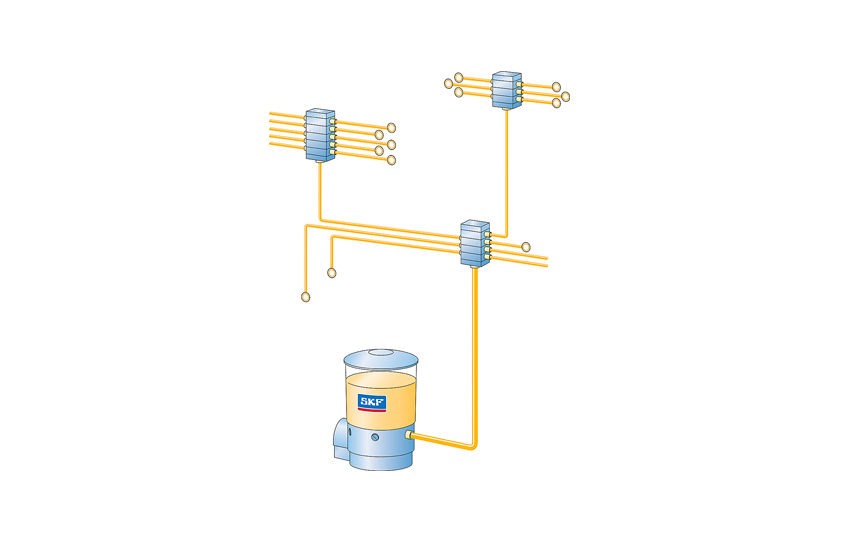
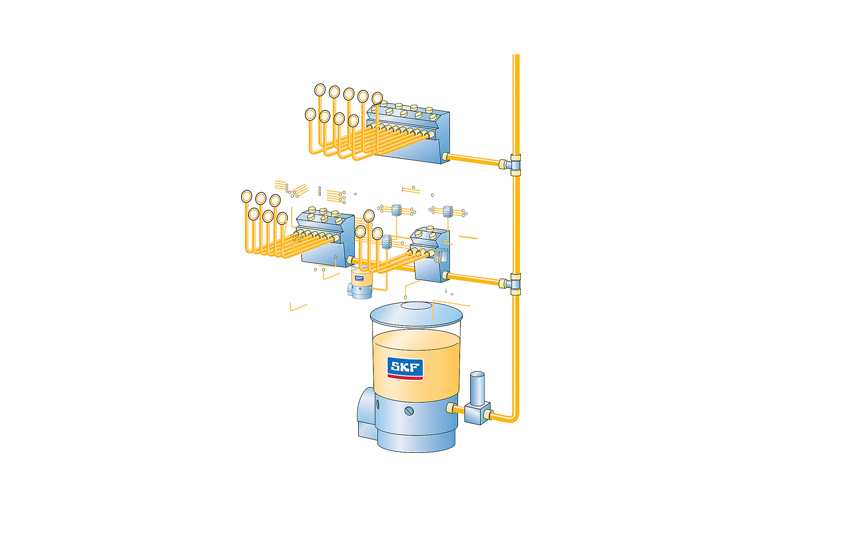
Due to the ease of use of such systems, the SKF ProFlex progressive lubrication system is primarily used in the aftermarket. It differs in design and function from an SKF MonoFlex lubrication system.
In a progressive lubrication system, the lubricant is continuously delivered from the pump to the lubrication points via a main line, and possibly also a secondary line. The lubrication cycle of a progressive lubrication system lasts until all pistons of the progressive distributor have distributed the lubricant.
Problems arise if the grease is contaminated or incorrectly filled. In such cases, the grease cannot be drawn in or it blocks the sensitive pistons of the progressive distributor. A monitored lubrication system will then issue an error message.
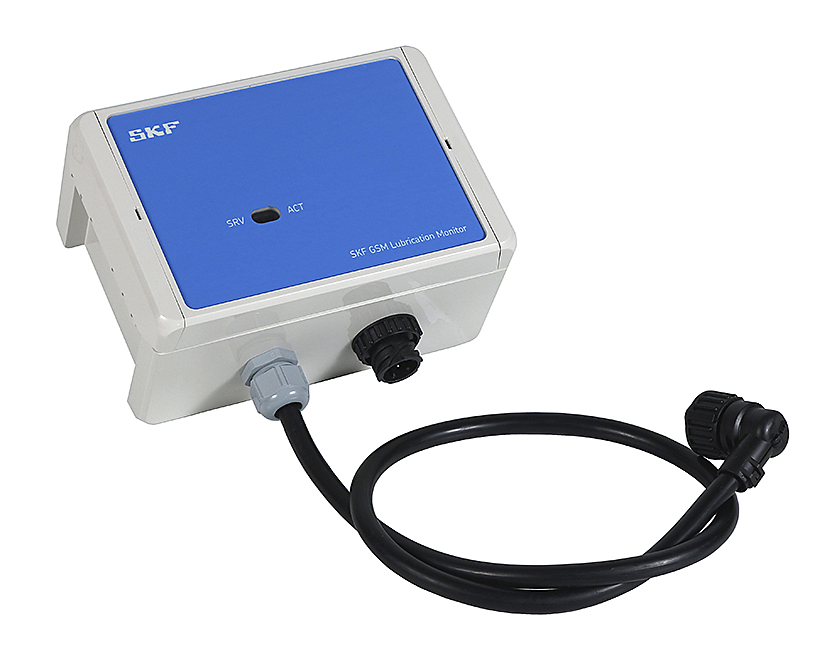
In today's industrial environment, feedback signals from a monitored lubrication system are extremely important. The market is therefore demanding intelligent upgrade options that minimize operating costs and extend the service life of wind turbines. For this reason, SKF Lubrication is focusing on standalone monitoring and control systems in its new developments. The SKF Lubrication Remote Monitor monitors retrofitted lubrication systems by issuing error messages when the fill level falls below a certain threshold or system malfunctions occur. Status messages are sent via SMS to one or more mobile phones when the grease reservoir is empty or a fault occurs in the lubrication system (e.g., a blockage in the lubricant distributors). This ensures that the maintenance team is immediately informed and can take corrective action. Thanks to pre-installed software and pre-configured components, the SKF Lubrication Remote Monitor is easy to use: Service numbers can be conveniently entered or deleted, and additional lubrication cycles can be set up, all via SMS. In the onshore retrofit market, SKF Lubrication offers a cost-effective solution for monitoring lubrication systems with the combination of this device and the pump.
Continued enormous potential growth is predicted for the offshore wind energy sector, which had a total installed capacity of 11 GW in Europe in 2015. The United Kingdom (GB), with its total installed capacity of over 5 GW [4], offers the best conditions for this growth.
Due to the locations of wind turbines and their harsh operating conditions at sea, the costs of offshore wind energy are constantly under strict control. This is partly due to the required C5-M standard (C5-M – very strong, marine; see DIN EN ISO 12944), which component manufacturers must meet. This corrosion protection class requires a service life of over 15 years in coastal and offshore areas with high salt exposure. The chemical nickel plating process used by SKF Lubrication makes it possible to offer a cost-effective alternative to more expensive stainless steel components.
![Bild 6: Installierte Gesamtleistung der Offshore-Windenergieanlagen in Europa [4].](https://evolution.skf.com/wp-content/uploads/sites/5/2016/12/16-4-lubrication-fig-6-ty.jpg "Bild 6: Installierte Gesamtleistung der Offshore-Windenergieanlagen in Europa [4].")
In electroless nickel plating, components are immersed in special solutions that create a nickel coating with a uniform thickness, for example, on lubricant distributors. This coating makes the components resistant to air, water, acids, and bases. At SKF Lubrication, all components (lubricant distributors, fasteners, fittings, pump units, and pump housings) undergo this process. To confirm corrosion protection class C5-M, they are subjected to a salt spray test for 1,440 hours; the results of this test are then verified and documented.
In offshore applications, SKF MonoFlex (single-line) lubrication systems are most commonly used.
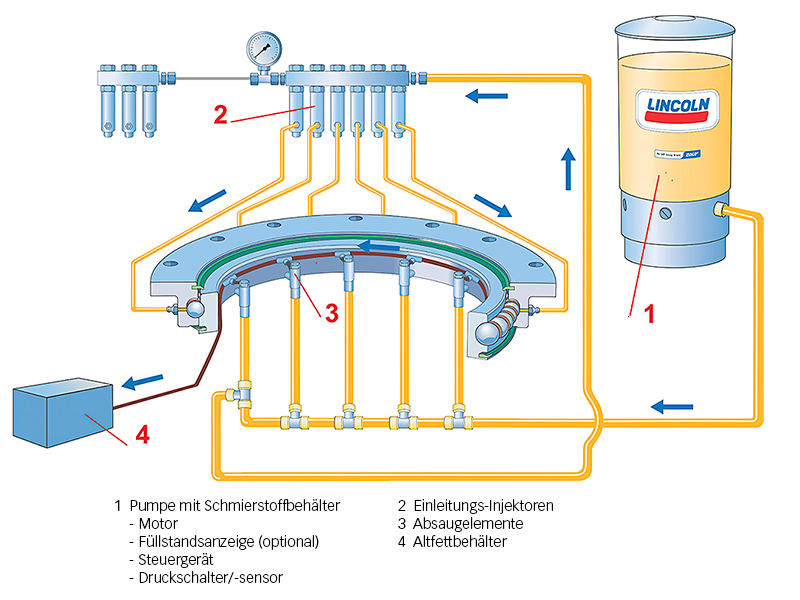
A single-line lubrication system operates cyclically. This means that the lubricant is delivered from the pump to the single-line injectors via a single line. Each lubrication point is equipped with an injector that supplies it with lubricant under pump pressure. Unlike progressive lubrication systems, in a single-line lubrication system the injectors are arranged in parallel. The advantage of this is that if one lubrication point becomes blocked, the remaining injectors can continue to supply grease. This technology has proven effective in offshore wind turbines, leading to increased system availability. The pump continues to deliver lubricant to the main line until a preset pressure is reached at the pressure switch. At this point, the pump's pressure switch is activated, shutting off the pump. In larger lubrication systems, the pressure can be monitored by an additional pressure switch installed at the end of the longest line. After the lubrication cycle is complete, the pump is switched off, and the pressure in the main line is released by a valve in the pump. Blockages of individual lubrication points or failures of one or more injectors do not affect the function of the rest of the lubrication system. This means that all remaining injectors continue to supply the lubrication points with grease. A single-line lubrication system can also be used to pump lubricants with rapid oil separation due to the pressure relief between lubrication cycles.
Lubrication Systems for Tidal Turbines
SKF Lubrication has proven itself a competent partner for the emerging field of tidal power plants, drawing on its extensive experience in the offshore wind and shipping industries.
The components of a tidal turbine that require lubrication behave similarly to those of a wind turbine. However, their lubrication requirements are far more demanding and must be adapted to the specific environment:
- Due to long maintenance intervals of up to six years, large grease reservoirs are necessary. These reservoirs typically have a capacity of at least 20 kg, as tidal turbines are extremely difficult to access and their maintenance costs are very high.
- Automatic refilling systems must ensure that the pumps do not run dry. Therefore, additional supply pumps are incorporated into the design process.
- Redundant systems double the reliability of the lubricant supply. If a central lubrication unit fails, the redundant second pump takes over the supply of fresh grease.
- Waste grease drains through the outlet bores in the bearing and must be collected appropriately. SKF Lubrication offers suction elements that drain the grease from these outlet ports into a centrally located collection container. This simplifies maintenance, as a separate grease collection container is not required for each outlet port.
- All components must comply with corrosion protection class C5-M (see above).
Many wave and tidal power plants are still in the prototype or testing stage. Since the British coast offers ideal testing conditions, over 10 MW are currently installed there to test the systems under real-world conditions. This installed capacity is higher than in the rest of the world combined.
SKF Lubrication has already equipped the first MW-scale tidal turbines for energy generation in the UK. It is only a matter of time before they begin contributing to the energy mix.